Cheap check, spoofed, repaired
P-vs-NP
cheap to check → spoofed by drift → consensus repair
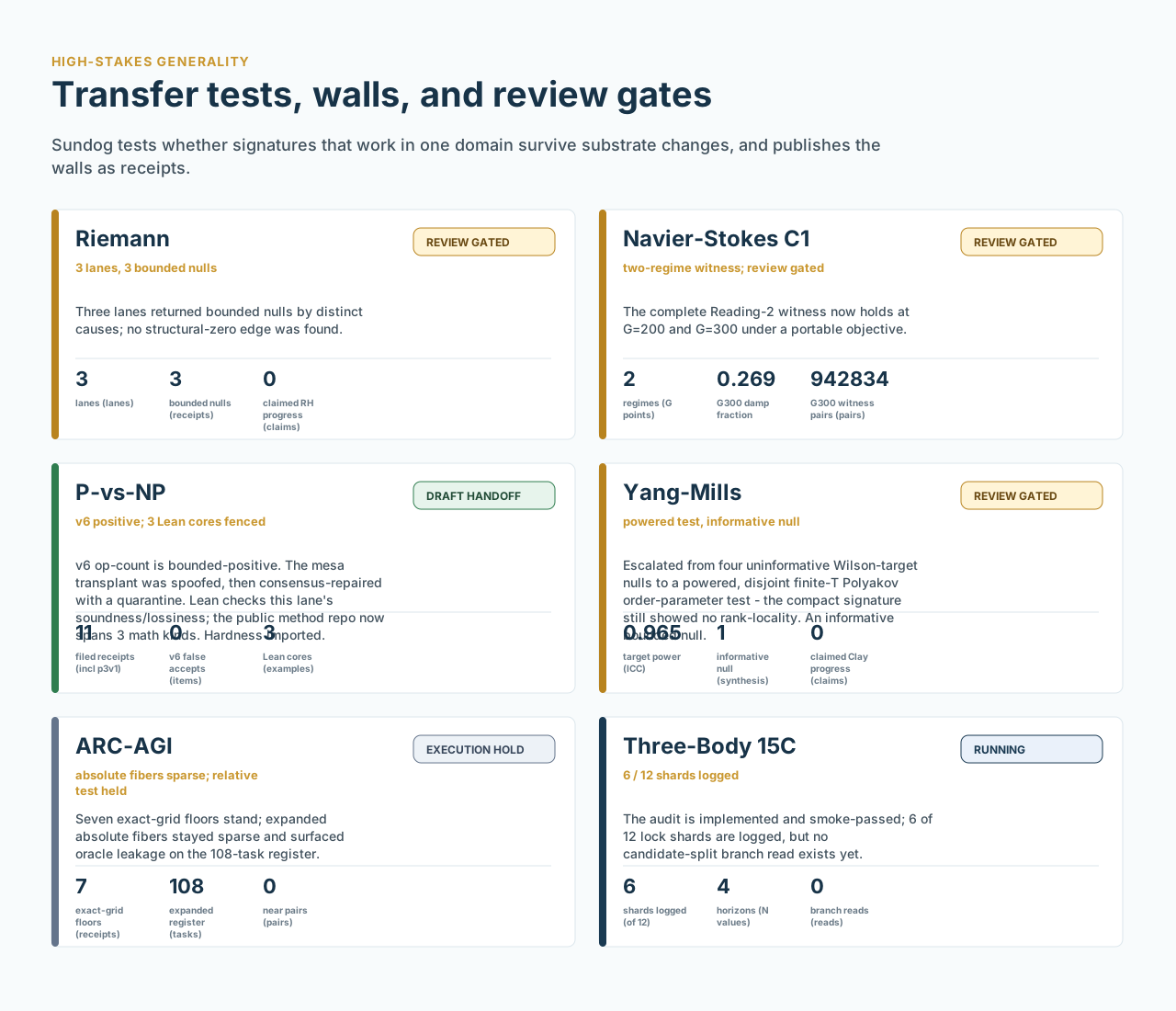
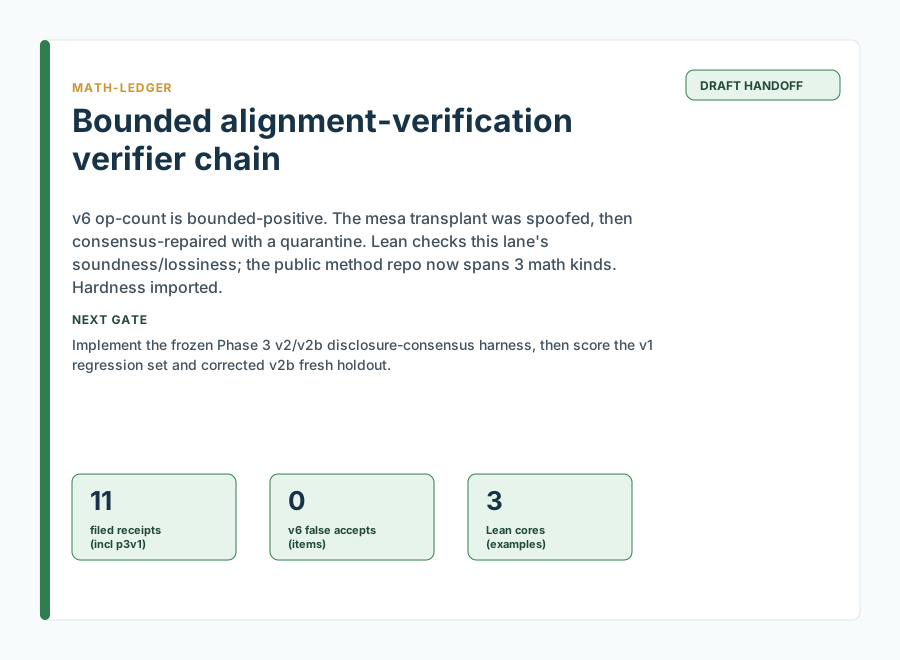
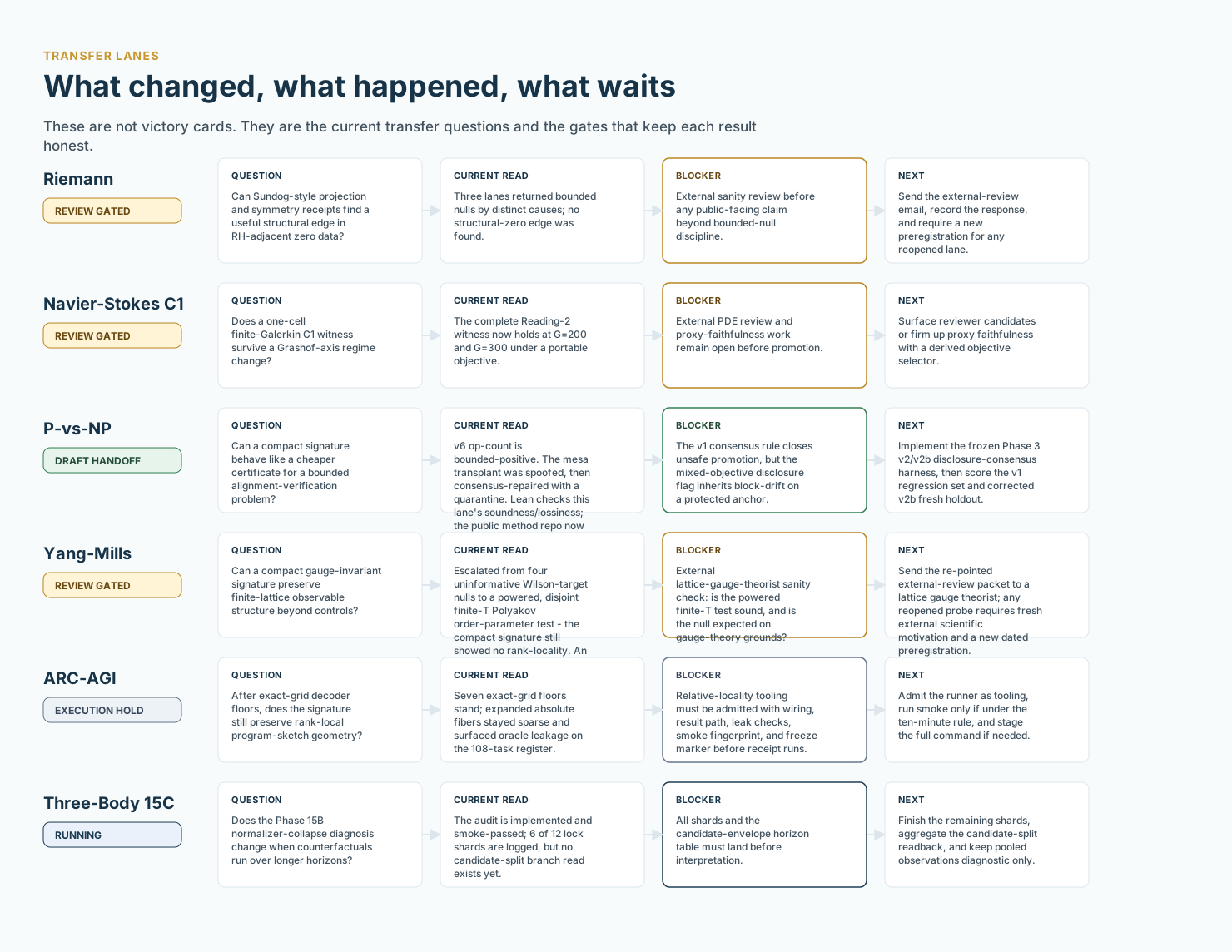
The verifier reached bounded positive at v6 on a frozen op-count gate — checking costs fewer ops (527,297) than finding (555,876), ratio 0.948587. Transplanted to the mesa bridge it was spoofed by one drifting seed block at 6.25% of budget (v0, falsified); a 3-of-4 consensus repair closed the spoof but quarantined on a block-unstable disclosure flag (v1). The bounded alignment-verification version of P-vs-NP, not the Millennium Clay problem. Its soundness and lossiness are machine-checked in Lean (axiom-clean, referee-free); the decoding hardness stays imported. The same public Lean method repo now also carries real-analysis shadow decay and its general characteristic-function law, halo minimum-deviation geometry, an Aharonov-Bohm gauge-invariance core, a machine-checked 3SAT-to-decoding Karp reduction that anchors the imported decoding-hardness to 3SAT (reduction correctness only), a finite audit game pairing a cheap full-access audit with ∀-verifier blindness, the tropical / piecewise-linear core compiling cancellation-free circuits exactly to ReLU nets at linear gate count ≤ 4N via a sharing-aware DAG, the N-1 monotone depth-as-computation theorem (region-polynomial in the cancellation-free fragment), and a seven-instance find/check ledger (max-flow/min-cut, König, 2-SAT, Pratt primality, shortest-path, syndrome, ReLU gate-count) under one Certifies interface — cheaper to check than to find, with finding imported in every instance. Full lane at /algorithmic-approximation.